These photos capture the moment when winter begins to give way. Sunlight returning, buds forming and the first signs of life pushing through. A quiet transition happening all around us.
It is that in between time. Not quite winter, not quite spring but full of small changes that are easy to miss unless you are looking for them.
Sunlight in the last days of Winter.
This row of trees along a field boundary was full of several hundred small but noisy song birds, which were very noticeable as one approached through the woods.
The sunlight squeezes between the trees to pick out the grass on this woodland path in a bright shade of green. The woodland which would have been open forest used for grazing swine from the Saxon era, was enclosed in the 1500's to provide wood to fuel the local ironworks. Generally it has been mixed deciduous but the larch plantation on the left dates from about 1980.
This churchyard has long been known locally for its impressive display of wild daffodils (no doubt it would gladden the heart of Wordsworth in a way that horticultural daffodils might not). They have been spreading further over recent decades with a sympathetic management regime. This year they have flowered much earlier than last year. Since the latter part of the 20th c. the site has been recognised as a Site of Nature Conservation Importance. It is also included in the “Surrey Important Grasslands Inventory” published in January by the Surrey Nature Partnership.
This oak still shows its leafless branches in the bright sun and set off against a clear blue sky. Although it could be called mature in reality it is still young by the standards of oak trees and could have several more centuries ahead of it if allowed to flourish.
Some of the willows in the foreground are just opening their buds, but the silhouetted oaks are not showing signs of spring yet. The clump of gorse in the far field, which for some years has been progressively returning the fields to heathland, is showing some yellow flowers though hardly visible at this distance.
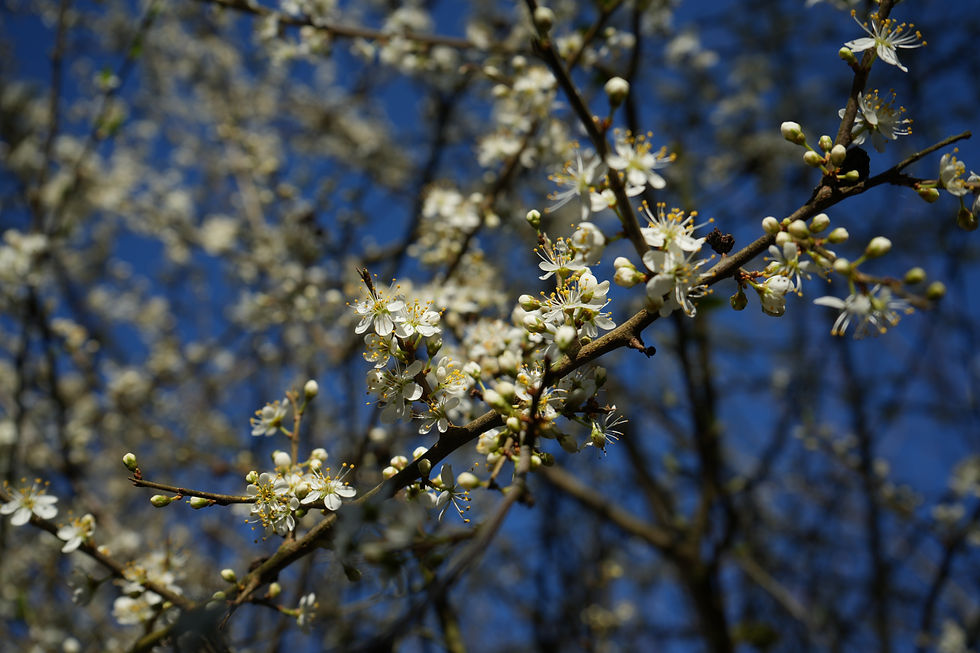
The blackthorn (also known as the sloe) has just come into bloom.
A ladybird rests in a relatively safe location between the prickles of a gorse bush. However, it was not well camouflaged! Gorse has been in flower since January.
Not much is sprouting yet on the top of this greensand hill, but the hill gives generous views across the Weald to the South Downs. On a clear day the Rampion windfarm can just be seen through a gap in the Downs.
A season in transition
Now, just a few weeks on, spring is arriving more fully but these moments remind us how gradual that change really is.
From the first blossom to the return of birdsong, nature does not switch overnight. It builds quietly, step by step. These in between moments are easy to miss but they are where the change really begins.
They are also a reminder of what makes our local landscapes so special and why protecting and restoring them matters.
If you are out walking in Guildford over the coming weeks, take a moment to look a little closer. You might be surprised by how much is already changing.




Comments