Discovering The Mount: How Daily Dog Walks Turned into a Passion for Conservation
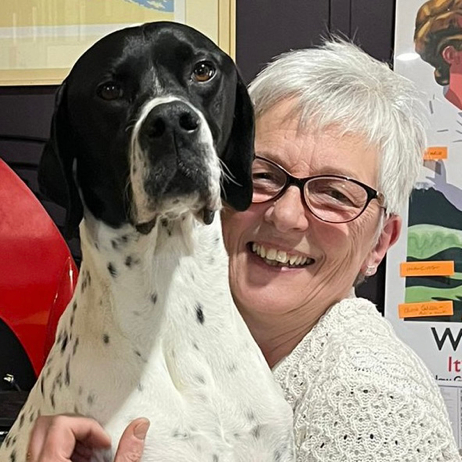
For nearly 30 years, The Mount was simply part of Marian’s local landscape. It wasn’t until lockdown - and later, daily dog walks - that she began to notice just how extraordinary this small hillside really is. Joining The Mount volunteer group opened her eyes to a hidden world of orchids, butterflies, wildlife tracks, and rare plants she’d once walked past without a second thought.
This is her story of discovering the beauty that appears when you slow down, look closely, and get involved in caring for a place you thought you already knew.
Despite living within a stone’s throw of The Mount for the last 28 years, it took a pandemic and
going there for our daily exercise to make me appreciate just how fortunate I am to live so close to
it.
I then got a dog and my visits increased to two or three times a day and that’s how I came across
the Mount volunteer group.
I confess I didn’t join straight away, but my interest was piqued and it was when they invited
participation in a botanical survey, that I got involved.
The survey was a real eye-opener: having to get on my hands and knees to identify plants within a
quadrat really made me appreciate the diversity of what grows on the hill and I found I became
much more observant on my walks. From signs of badger activity, seeing weasels leaping across
the path, finding a grass snake warming itself, noticing the caterpillars of just a few of the many
butterflies and moths that can be found here, to the tiniest of flowers (fairy flax and eyebright are
favourites) – there’s so much to be seen in a relatively small area.
I confess I haven’t taken part in many of the scrub-clearing sessions, but I can attest to the fact
that a tree popper is not quite as much fun as it sounds! Getting a hawthorn root out is still quite a
task, but it is extremely satisfying when it finally breaks free of its earthy bonds!
I also took part in a session of seed planting to encourage the spread of the rare Small Blue
butterfly, which only lays its eggs on kidney vetch. It flowers two years after planting and when the
time came, I was ridiculously pleased to find healthy clumps in the scrapes we’d made, and a
survey later that year found Small Blue butterflies close by.
The pyramidal orchid, which is now the symbol of the group, thrives here along with the common
spotted orchid and I was delighted to find bee orchids for a couple of years running. There was a
particular clump of orchids that caught my attention because of their darker colour. Helen (one of
the group’s founders) called in the help of an orchid expert, and we discovered these darker plants
were a hybrid of the common spotted orchid and marsh orchid. As a hybrid requires both parents
to be present, there had to be marsh orchids in the vicinity and lo and behold, we found one in the
same group.
I think I can honestly say that if you’d told me five years ago I’d be getting excited about identifying
orchids in a field, I’d have laughed at you, but I guess that’s the magic of getting closer to Nature.


Comments